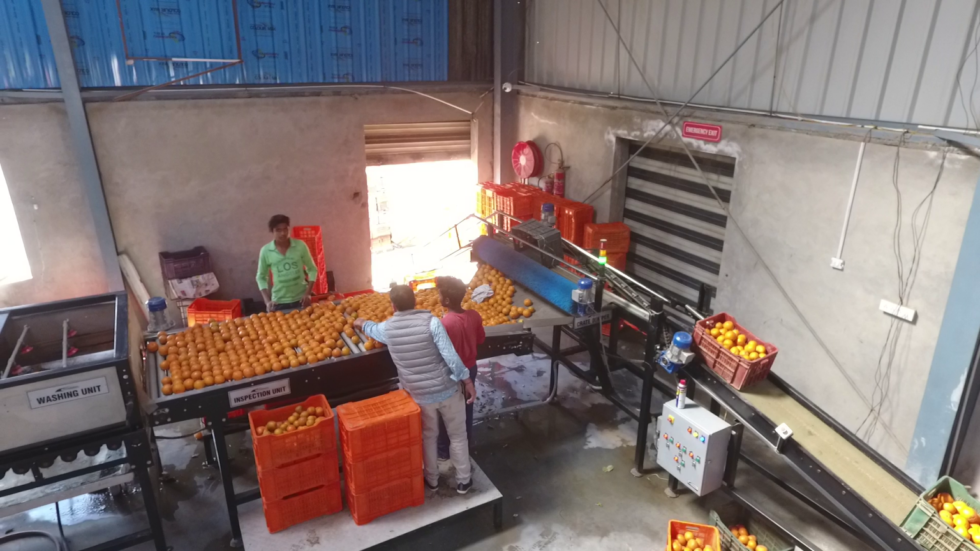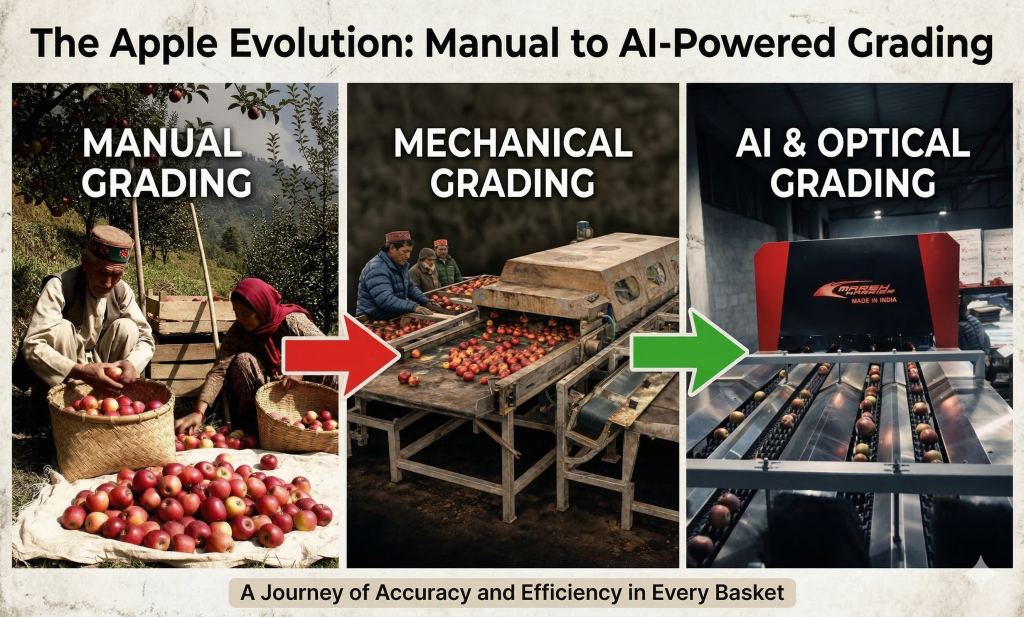



In the modern trade of fruits and vegetables, grading exists at every level of the supply chain. At the farm level produce is often sorted manually before being sent to local markets or traders. At the packhouse level grading is done using mechanical grading machines or optical grading machines. Even at the retail end, buyers make their own judgement while selecting produce. In simple terms, grading is present everywhere and at each stage it is done using the best available resources whether that is human judgement or machine-based automation.
From Manual Grading to Rule-Based Automation
Over time, the horticulture sector made a clear shift from manual grading to automated fruit grading machines. Automation brought structure into this process. Rule-based grading systems, built on predefined instructions using IF and THEN logic, allowed packhouses to create standard parameters for sorting and grading fruits and vegetables based on color, size, shape and weight.
For example, in apple grading machines, a rule can be defined as follows: IF the color of an apple is greater than 90%, THEN the fruit is directed to a specific exit. Similar rules are created for different size ranges, color variations, weight categories and other optical attributes. This approach marked a leap forward in sensible automation as it introduced repeatability and replaced manual grading.
Early Marsh Harrier grading machines were built on this rule-based optical grading approach. As grading requirements evolved, this approach expanded towards more data-driven systems.
Fruits are not uniform products. They do not follow fixed patterns and variation is natural and constant. External defects do not always follow a clear rule and more importantly internal defects cannot be seen at all through surface level inspection. In mango grading and sorting, spongy tissue in mango is often identified by skilled labor through tactile inspection. This has created high dependency on skilled labor, uncertainty in pricing, additional verification effort and reduced trust in the supply chain.
How AI Grading Machines are Improving Fruit and Vegetable Grading?
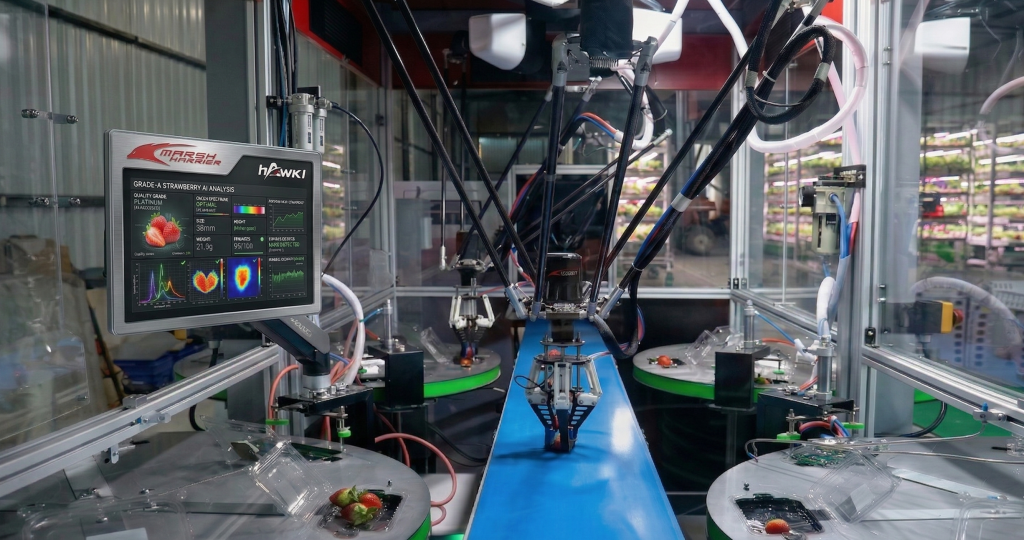
The shift towards AI in grading machines emerged as a direct response to this gap, shaping the next phase of development at Marsh Harrier AI grading machines. Unlike rule-based systems that depend on predefined logic, AI-based grading machines learn from incoming data and adapt to changing conditions.
In scenarios such as disease outbreaks, where the occurrence of a specific defect can increase suddenly, traditional systems require new rules or retraining of labour. AI machines, on the other hand, adjust detection dynamically based on observed patterns.
With this approach, technologies like hAwkI and scanX were developed as core AI modules, not just add-ons.
- hAwkI enables AI-based external defect detection using 360 degree imaging and analytics, allowing complete surface evaluation under varying conditions.
- scanX extends this capability further by enabling internal quality analysis, addressing one of the most critical gaps in grading machines.
Together, these technologies represent a shift from rule execution to AI-based defect detection and grading, defining the next generation of the best grading and sorting machines.
Industry recognition and Impact of AI Grading Machines
This disruptive innovation has also been recognised at a national level, with Marsh Harrier, owned by Sickle Innovations Pvt. Ltd., receiving the Gold Award at the Mint Tech4Good Awards, sponsored by Salesforce for Best Use of AI in Agriculture and Food Security.
This recognition reflects not just the use of AI but its practical application in solving real challenges.
The Future of AI Grading Machines in Horticulture
The direction ahead points towards an even deeper level of integration leading to cognitive automation. This shift from rule-based automation to AI-driven machines is not just an upgrade but a foundational change in how grading is positioned within the horticulture value chain.
Marsh Harrier is built on this shift, converting complex AI technologies into simple, affordable, and accessible fruit grading machines for farmers, packhouses, exporters and businesses.